Maybe it’s the snoring your partner keeps bringing up. Maybe it’s your seven-year-old sleeping with their mouth wide open. Or maybe your dentist pointed out worn, chipping teeth or a narrow upper jaw and said, “You should have an orthodontist look.”
Different ages, same questions. Is something wrong? And what will it take to fix it?
Airway orthodontics in Evergreen and Conifer starts with straight answers. Dr. Bryan Williams looks at how your jaws are shaped, how your bite fits together, and how much room there is inside the mouth. Then he tells you what’s needed now, what can wait, and what isn’t needed at all.
Teeth are only part of the picture. The width and position of the jaws shape the roof of the mouth, how much space the tongue has, and how the top and bottom teeth meet. When a jaw is narrow or set back, crowding, crossbites, and a bite that wears teeth down often follow.
Airway orthodontics looks at all of it together. Dr. Williams describes his work as “more than just straightening teeth.” He plans around the jaw joint, jaw development, the width of the smile, and how it all fits the full face.
What that looks like depends on your age. So the plan starts with you, not a template.
A young jaw is still growing, which opens a window when guiding growth can be simpler than correcting it later. For plenty of kids, an early exam ends with “let’s check back next year.” That’s a good outcome too.
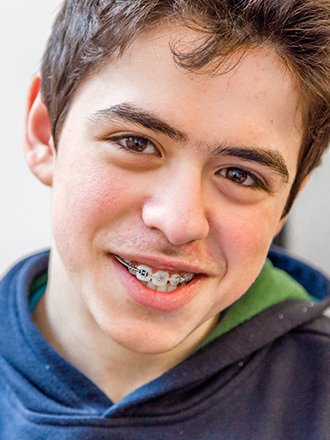
Many teens are still growing, especially in the early teen years. Treatment can improve jaw width and bite while fitting around school, sports, and a packed family calendar.
Adult jaws have finished growing, so the options change. They don’t disappear. Depending on what Dr. Williams sees, your plan may use braces or clear aligners to improve the bite and the shape of the arches. If you’ve been diagnosed with sleep apnea, he can talk with you about whether orthodontic treatment has a role alongside your physician’s care.
None of these is a diagnosis on its own. But if one or more sounds familiar, for you or your child, an orthodontic exam can tell you whether jaw shape and bite are part of the story:
One thing to know up front: only a physician can diagnose a sleep or breathing disorder. If something in your exam points that way, Dr. Williams will tell you plainly and explain why a physician’s evaluation is the right next step.
It starts with a thorough exam from Dr. Williams himself. He checks your bite, jaw position, and smile width, and a digital 3D scan and x-rays show what’s happening below the surface. Together they give him a clear picture of how your jaws and teeth fit.
Next, he sits down with you and walks through what he sees. You’ll get one of three honest answers: treat now, watch and wait, or nothing needed. And you’ll hear the reasoning behind it, in plain terms.
When treatment makes sense, the tools depend on age. For a growing child or young teen, a palatal expander can gently widen the upper jaw, creating more room for teeth and a better-fitting bite. For teens and adults, braces or clear aligners can reshape the arches and bring the bite together. And when jaw position is the real problem, surgical orthodontics is an option Dr. Williams recommends only when it truly changes the outcome.
Look, timing sits underneath every airway question. For parents, it sounds like, “Is this too early? Will we do braces twice?” For adults, it’s “Is it too late for me?” and “Is this going to end with surgery?”
Dr. Williams built his practice around answering those questions honestly. In his words, excellent care means starting “not too late or not too early” and recommending what’s best for the patient, “even if it doesn’t benefit my business.”
So if the honest answer is “not yet,” that’s what you hear. If you don’t need something, he’ll say that too. You leave knowing what’s needed now and what can wait.
Airway work is jaw work, and that’s where specialist training shows. Orthodontists train two to three years beyond dental school to understand, as Dr. Williams puts it, “tooth movement and jaw movement and occlusion, bites, all that stuff.” He completed his orthodontic residency at the University of Washington after graduating valedictorian from Indiana University School of Dentistry.
Orthodontics has been part of his life since high school, when he trimmed plaster models in his father’s orthodontic lab. Today, as Dr. Bryan Williams, DDS, MSD, he has cared for patients in Evergreen and Conifer since 2005. He’s the same doctor at both offices, from your first visit to your last.
He also does the explaining himself. One adult patient had been told by several orthodontists over the years that he needed jaw surgery. He wrote that Dr. Williams “spent the time to build clay models to figure out details, then explain everything to me.”
Parents notice the same thing. One mom whose son started treatment at age seven said the team “explained each process and each appointment to him.”
And with two mountain offices, care stays close to home. The Evergreen office is open Monday, Tuesday, and Thursday, and the Conifer office is open Wednesdays. Patients from Kittredge, Genesee, Aspen Park, Pine, and Bailey can skip the drive down the hill for every visit.
Your first visit is a conversation, not a sales pitch. Expect the exam, the 3D scan, and plenty of time for questions. Feeling nervous? Say so. Patients who come in anxious tell us they’re met with patience, not judgment.
Any new appliance usually brings a few days of pressure while your mouth adjusts. Most people settle in quickly. Visits after that are short, start on time, and fit around work, school, and practice schedules.
How long does it take? That depends on your age, your bite, and the plan, and you’ll have a clear timeline before anything starts. You’ll also know your total cost up front, and the team handles the insurance paperwork for you. See our orthodontic payment and insurance options for details.
What changes after? More room for teeth. A bite that comes together the way it should. A wider smile that fits your face. And if breathing concerns remain, Dr. Williams will point you toward the right next conversation with your physician.
Children, teens, and adults can all be evaluated. Common reasons include crowding, a crossbite, a narrow upper jaw, teeth wearing down from a bad bite, or snoring and mouth breathing that someone has noticed. An exam tells you whether treatment would help and when.
Many concerns can be spotted as early as age seven, while the jaw is still growing. An early exam doesn’t mean early treatment. Often Dr. Williams will simply recommend watching growth and checking back later.
Not necessarily. Adult jaws have stopped growing, so the plan looks different than it would for a child, often using braces or clear aligners to improve the bite and arch shape. Dr. Williams will give you an honest answer about what’s realistic for you.
Orthodontic treatment can widen a narrow jaw and improve the bite, but it isn’t a cure for a sleep disorder, and only a physician can diagnose one. If Dr. Williams sees signs that point to a breathing issue, he’ll tell you and explain why a physician’s evaluation should come next.
Not always. Surgical orthodontics is an option Dr. Williams recommends only when it truly changes the outcome. If he does recommend it, he’ll walk you through why, what the alternatives are, and what each one can and can’t do.
Yes. Dr. Williams sees patients at the Evergreen office on Monday, Tuesday, and Thursday, and at the Conifer office on Wednesday. You’ll see the same doctor at either location.
Whether it’s your child’s snoring, your teen’s crossbite, or your own worn teeth, you don’t have to guess what it means. You also don’t have to commit to treatment just to find out.
Book a consultation at our Evergreen or Conifer office. Dr. Williams will examine your jaw and bite, show you what he sees, and tell you honestly what’s needed now and what can wait. Call (303) 670-5878 or request your consultation online.